Do You Need an Emergency Dentist in Plano, TX for a Loose Crown?
A loose crown can feel minor at first. You notice a slight wiggle when you chew, or a strange hollow sensation when you bite down, and you tell yourself you can deal with it after the weekend. Then the crown shifts again while you are eating, catches on floss, or starts letting cold air hit the tooth underneath. At that point, the question gets more urgent: is this something that can wait for a routine dental visit, or do you need an emergency dentist in Plano, TX right away?
The short answer is that a loose crown is not always a middle of the night emergency, but it should never be ignored. A crown that is moving is no longer doing its job well. It stops sealing and protecting the tooth the way it should, and once that seal is compromised, the situation can change quickly. Food, bacteria, and pressure can all turn a manageable repair into a more painful and expensive problem.
In practice, the right response depends on what is happening under the crown, how unstable it is, and whether you have pain, swelling, or signs of damage to the tooth itself. Some loose crowns can wait a day or two if you are careful. Others deserve same day attention.
What a dental crown is supposed to do
A crown is a custom restoration that covers Emergency dentist Plano, TX a damaged or heavily restored tooth. Dentists use crowns to strengthen teeth after root canals, protect cracked teeth, rebuild broken-down molars, and restore shape and function when a filling is no longer enough. When a crown fits properly and stays securely cemented, it acts like a protective shell.
That protection matters more than many patients realize. The tooth underneath a crown is often more vulnerable than a tooth that has never needed major treatment. It may have large areas of natural structure missing, old decay, a history of fracture, or a root canal that leaves the tooth more brittle over time. The crown is not just cosmetic. It is part of the tooth's long-term survival plan.
When the crown loosens, the weak spots underneath become exposed to pressure and bacteria. Even a tiny amount of movement can create leverage on the remaining tooth structure. That is why dentists take a loose crown seriously, even when the patient says it does not hurt much.
Why crowns come loose in the first place
Crowns loosen for several reasons, and the cause often determines how urgent the visit is.
Sometimes the cement simply fails over time. Crowns live in a rough environment. They deal with saliva, temperature changes, sticky foods, grinding forces, and years of wear. Even good dental materials do not last forever.
In other cases, the problem is decay at the margin where the crown meets the tooth. If bacteria find their way under the edge, the tooth can soften and lose the shape that helped hold the crown in place. A crown that suddenly feels loose after years of stability sometimes points to this issue.
Biting habits matter too. Patients who clench or grind, especially at night, put repeated stress on crowns. I have seen crowns loosen in people who never noticed their grinding until the crown started moving. Sticky foods are another common trigger. Caramel, gummy candy, and even crusty bread can tug at a crown that was already weakening.
Then there is fracture. The crown itself can crack, or the tooth under it can break. When that happens, the crown may feel loose, but the underlying problem is much more significant than a recementing appointment.
When a loose crown becomes an emergency
Not every loose crown needs an after-hours call, but some scenarios absolutely justify urgent care. The key issue is risk, not just discomfort. A crown that can be stabilized for a day or two is different from one that is exposing a damaged tooth, causing pain, or threatening further breakage.
Here are the situations where I would urge someone to contact an emergency dentist in Plano, TX promptly:
- The crown has come off completely and the tooth is painful, sharp, or visibly broken.
- You have swelling, throbbing pain, or pressure that suggests infection.
- The crown is so loose that it could come off and be swallowed or inhaled.
- The tooth underneath feels cracked, moves independently, or hurts when you bite.
- The loose crown is on a front tooth and there is bleeding, trauma, or obvious structural damage.
Those are not edge cases invented for drama. They are the patterns that tend to worsen fast. A patient who waits through a long weekend with a loose crown and swelling often ends up needing more than simple recementation. Once bacteria reach the inner tooth or the root area, treatment can shift toward root canal therapy, extraction, or a new crown build-up.
When it may be okay to wait briefly
There are situations where a loose crown can wait until the next available dental appointment, especially if you can get in within a day or two. If the crown is only slightly mobile, you have no pain, no swelling, and the tooth does not feel cracked, this may not require immediate emergency treatment. The same is often true if the crown came off cleanly, the tooth underneath is not sensitive, and you can keep the area protected while you arrange care.
That said, "can wait briefly" is not the same as "can wait until I get around to it." Crowns rarely tighten back up on their own. The longer a loose crown remains in place, the greater the chance of leakage, decay, or fracture. A tooth that was salvageable on Monday can become much harder to restore by Friday if it takes repeated chewing pressure without full protection.
A useful rule is to judge the tooth by function and symptoms. If you cannot chew normally on that side, if temperature bothers it, if the crown lifts when you bite, or if the tooth feels different in a way that worries you, sooner is better.
What to do before you get to the dentist
The hours between noticing the problem and sitting in the dental chair matter more than most people think. Good short-term handling can prevent a simple problem from becoming a complicated one.
If the crown is still on the tooth but wiggling, leave it alone as much as possible. Do not keep pushing on it with your tongue to test how loose it is. Patients do this constantly, and it almost always makes the situation worse. Avoid chewing on that side. Skip sticky, hard, and crunchy foods. Soft foods, eaten slowly on the opposite side, are your friend.
If the crown comes off completely, keep it. Bring it to the dental office. Sometimes the crown can be cleaned and recemented if it is intact and the tooth underneath is still sound. Rinse it gently with water, but do not scrub aggressively or wrap it in tissue where it can be thrown away by accident.
Until you are seen, these steps are the safest course:
- Store the crown in a clean container if it has come off.
- Rinse your mouth with lukewarm water after eating.
- Use sugar-free gum or dental wax over a sharp exposed tooth if needed for comfort.
- Take an over-the-counter pain reliever if you normally tolerate it and it is safe for you.
- Call for an appointment as soon as you know the crown is loose.
One important caution: avoid using household glue. It sounds obvious, but it happens. Super glue, craft adhesive, and similar products can injure soft tissue and make dental treatment much harder. Temporary dental cement sold at a pharmacy can sometimes help in a pinch, but even then, it is best used only if your dentist advises it. A poorly reseated crown can trap bacteria or create a bite issue that leads to fracture.
The difference between loose and lost
People often use "loose crown" and "crown fell out" interchangeably, but from a treatment standpoint, they are not the same.
A crown that is loose but still seated may have a better chance of going back on cleanly if the underlying tooth has not changed. The risk in that situation is continued movement. Every bite can widen the problem.
A crown that has come off completely creates a different set of concerns. If the tooth core underneath is intact and dry enough to evaluate, recementation may be possible. But if the tooth broke when the crown came off, or if old decay is present, the original crown may no longer fit. In those cases, the dentist may need to remove decay, rebuild the tooth with filling material, and make a new crown.
Patients are often surprised by how often a "simple re-cement" turns into a larger procedure. That is not upselling. It is usually a reflection of what caused the loosening in the first place. A crown that came off because the cement aged out is one thing. A crown that came off because half the tooth underneath decayed is another.
Pain changes the equation
Loose crowns do not always hurt, but pain is a useful signal. Sharp pain with cold may mean exposed dentin or an open margin. Pain on biting can suggest a crack, an inflamed ligament, or infection around the root. Constant throbbing raises concern for pulpal inflammation or abscess. Even pain that comes and goes deserves attention if it appeared around the same time the crown loosened.
One pattern that concerns dentists is a crown that feels high or slightly off, followed by pain when chewing. Sometimes what seems like looseness is actually movement from a fractured tooth segment. A patient will say, "It clicks when I bite." That clicking can be the clue that the issue is deeper than failed cement.
Swelling is even more urgent. Visible puffiness in the gum near the crowned tooth, tenderness under the jaw, a bad taste from drainage, or facial swelling should move the problem into urgent territory. Those signs can indicate infection, and infection does not respect your calendar.
What an emergency dental visit usually involves
Many patients hesitate to call because they imagine a long, complicated procedure the same day. Often, the first goal is simply to stabilize the tooth, relieve pain, and prevent further damage.
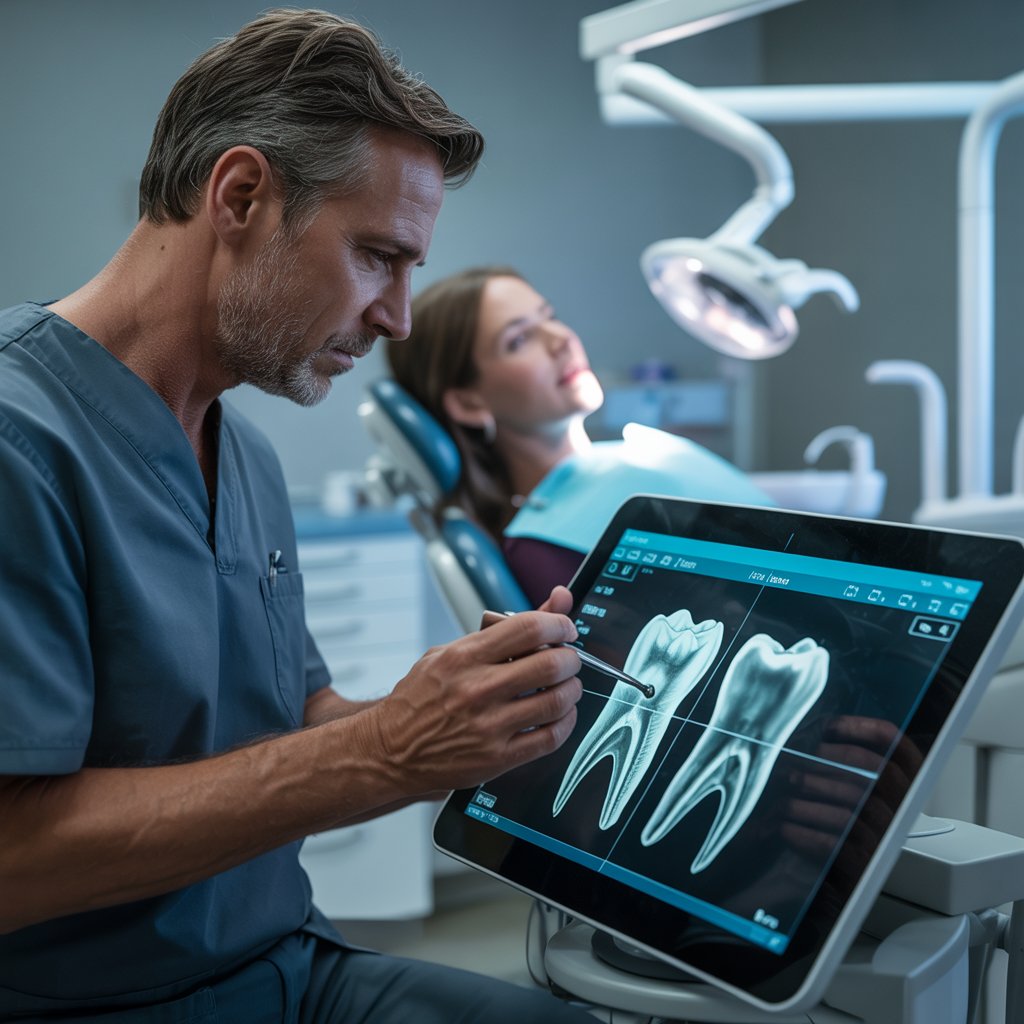
At the visit, the dentist will examine the crown, the tooth underneath, your bite, and the surrounding gum tissue. X-rays are common because they help show decay under the crown, changes around the root, and hidden fractures. If the crown has come off, the dentist will inspect both the inside of the crown and the tooth preparation to see whether the pieces still fit together.
From there, several outcomes are possible. If the crown and tooth are both intact, recementation may be all you need. If the fit is off because of decay or a chipped core, the dentist may recommend building up the tooth and replacing the crown. If the tooth is cracked deeply, treatment could involve root canal therapy or extraction, depending on the severity and whether the tooth is restorable.
This is where judgment matters. Not every compromised crowned tooth should be saved at all costs. A molar with a vertical root fracture, for example, may not have a predictable future even if you can put the crown back on temporarily. A good dentist will explain not only what can be done, but what is likely to last.
Front tooth versus back tooth, the urgency can differ
A loose crown on a front tooth often feels more urgent, and not just because of appearance. Front teeth are exposed to different stresses, and when their crowns loosen after trauma or biting incidents, the underlying tooth may be fractured in a way that affects long-term stability. There is also the social reality. People talk, smile, attend meetings, go to school, and show up at family events. A dislodged front crown can be emotionally distressing even if it is not medically dangerous.
Back teeth bring a different concern. Molars take heavy chewing loads, and a loose crown there can quickly lead to structural failure if you keep using it. Many patients can "work around" a back tooth for a while, but every meal becomes a gamble. A Emergency dentist Plano, TX brittle root canal treated molar under a moving crown is especially vulnerable.
The right response in both cases is to stop stressing the tooth and get it evaluated promptly.
Why Plano patients often wait too long
There is a pattern many dental offices see, especially in busy communities. People put off care because the symptom seems manageable, they have work obligations, they are watching a child’s sports schedule, or they assume a crown problem is mostly cosmetic. Others have had a crown recemented once before and expect it to be equally simple again.
The risk is that dental problems are not static. A loose crown on Thursday may be a fractured tooth by Sunday if you bite the wrong way. I have heard versions of the same story many times: the patient noticed some movement, avoided calling because there was no major pain, then lost the crown during dinner and discovered the tooth underneath had broken almost to the gumline.
That is when timing matters. Seeing an emergency dentist in Plano, TX early may preserve options. Waiting can close them.
Children, older adults, and special cases
A crown on a child or teenager deserves a slightly different lens, depending on whether it is a baby tooth crown or a permanent restoration. Stainless steel crowns on baby molars are common in pediatric dentistry and can loosen. These do need prompt evaluation, but the urgency depends on pain, swallowing risk, and whether the child is comfortable. Because young children may not describe symptoms clearly, a call to the dentist is wise even if the issue looks small.
Older adults often face a different challenge. Crowns placed decades ago may loosen because the underlying tooth has changed gradually. Gum recession, dry mouth from medications, root decay, and older dental work all increase the odds that a loose crown is part of a larger picture. In this group, what looks like a simple crown problem sometimes reveals recurrent decay extending below the gumline.
Patients with a history of heavy grinding, extensive bridgework, implants next to crowned teeth, or recent trauma deserve extra caution as well. In those situations, the bite forces and neighboring structures can complicate what would otherwise be straightforward.
A note about temporary fixes at home
Temporary crown cements sold in stores can be useful in limited circumstances, but they are not magic, and they are not a substitute for diagnosis. If a crown came off cleanly, the tooth is not broken, and your dentist recommends using a temporary material until you can be seen, that can be reasonable. The crown still needs to be properly evaluated and seated.
Problems arise when patients try to solve everything themselves. A crown placed back on in the wrong orientation can lock into a bad position. Excess material can irritate the gum or alter the bite. Worse, a person may assume the issue is handled while decay or fracture underneath continues unchecked.
There is also a subtle risk with "it feels fine now." Teeth can stop hurting for bad reasons. If the nerve dies, pain may temporarily ease before infection develops. Comfort is helpful, but it is not proof that the tooth is healthy.
How dentists decide whether the crown can be saved
Patients naturally want to know whether the existing crown can go back on. Dentists ask a few practical questions. Is the crown intact? Does it still fit the tooth precisely? Is there enough healthy tooth structure remaining to retain it? Is there decay at the margins? Has the bite changed? Is the tooth cracked?
If the answers are favorable, recementing the crown can be fast and cost-effective. If not, pushing an old crown back into service often leads to repeat failure. That is why a dentist may recommend a new crown even when the old one "looks okay" from the outside.
Margins are especially important. A crown can appear intact in your hand but still have microscopic distortion or a chipped edge that prevents a proper seal. Dentists worry about that because a poor seal invites leakage, and leakage is how recurrent decay develops.
The practical answer most patients need
If your crown is loose, call a dentist sooner rather than later. If you have pain, swelling, a broken tooth, recent trauma, or a crown that is barely hanging on, it is reasonable to seek an emergency dentist in Plano, TX the same day. If the crown is only mildly loose and you have no symptoms, you may not need an after-hours visit, but you should still schedule prompt care and baby the tooth until you are seen.
That middle ground is where many people get stuck. They want a yes or no answer, emergency or not. Dentistry often works in shades of gray. The best question is not simply, "Can I survive the weekend?" It is, "What are the chances this gets worse if I wait?" With a loose crown, those chances are high enough that delay rarely pays off.
The crown is telling you something has changed. Whether that change is simple cement failure or a deeper structural problem, the safest move is to have it examined before more chewing, more bacteria, and more time make the answer more complicated than it needs to be.
Vitality Dental
1220 Coit Rd # 106, Plano, TX 75075, United States
+1 972-645-4100
FAQ About Emergency dentist Plano, TX
Will the ER do anything for dental pain?
An emergency department can assess urgent symptoms and provide medical stabilization. Definitive treatment of the tooth usually requires a dentist. Seek emergency medical care for breathing or swallowing difficulty, uncontrolled bleeding, or serious facial injury.
What to do if I have a dental emergency in the middle of the night?
Contact a dentist or after-hours dental service promptly for guidance. If a permanent tooth is knocked out, keep it moist in milk while seeking immediate care. If symptoms suggest a medical emergency, go to an emergency department.
What qualifies as a dental emergency?
A knocked-out permanent tooth, severe or persistent tooth pain, a significant dental injury, or swelling may require urgent dental assessment. Call a dentist to describe the symptoms and determine timing. Uncontrolled bleeding or difficulty breathing or swallowing requires emergency medical care.